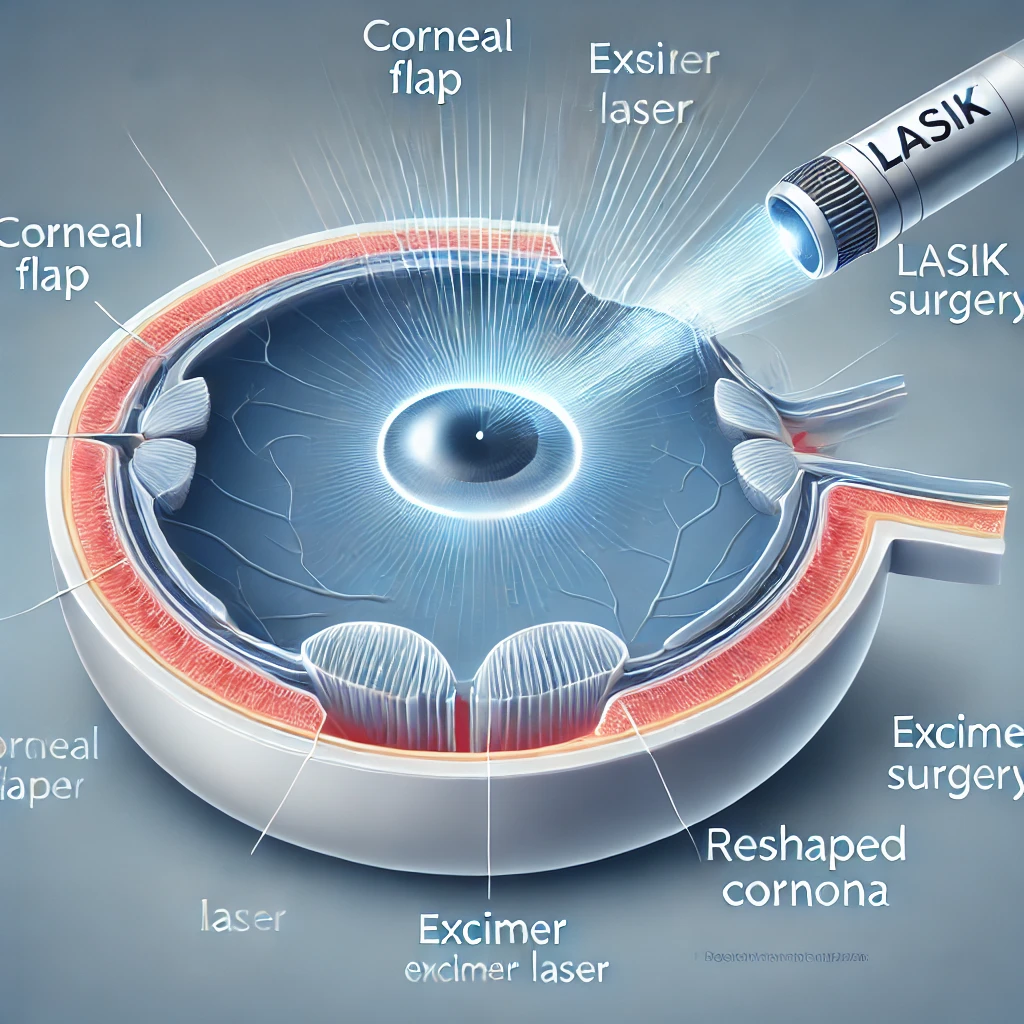
LASIK surgery is a popular procedure for correcting refractive errors such as nearsightedness, farsightedness, and astigmatism. However, many wonder whether the cornea, altered during the surgery, can naturally return to its original state over time. Here, we’ll explore the facts and clear up misconceptions to provide clarity.
Understanding LASIK and Its Impact on the Cornea
- Permanent Changes to the Cornea
- LASIK involves reshaping the cornea using an excimer laser to adjust how light refracts into the eye. This reshaping is permanent; the portion of the cornea that has been removed does not regenerate or grow back.
- Stability After Surgery
- Typically, the cornea stabilizes within 6 months to 1 year post-surgery. Once stable, its new shape remains unchanged under normal conditions, barring injury or disease.
Factors That Influence Vision Changes After LASIK
Even though the cornea doesn’t revert to its pre-surgery state, some individuals may experience changes in vision years after LASIK. These are usually due to other factors:
- Minor Regression (“Post-LASIK Regression”)
- In some cases, the cornea may exhibit a slight tendency to return to its original curvature. This is rare and typically results in only minor vision changes.
- Presbyopia (Age-Related Changes)
- As people age, the lens inside the eye loses flexibility, leading to presbyopia (difficulty focusing on close objects). LASIK does not prevent this natural aging process.
- Eye Diseases
- Conditions such as cataracts, glaucoma, or keratoconus can affect vision independently of LASIK. Regular eye exams are crucial for early detection and management.
- Lifestyle Factors
- Excessive screen time, poor eye hygiene, and prolonged near-work activities can lead to eye strain and perceived vision changes.
Addressing Vision Changes Post-LASIK
If vision changes occur years after LASIK, there are ways to manage or correct them:
- Refractive Enhancement (LASIK Retreatment)
- For significant regression, a follow-up LASIK procedure can fine-tune the cornea. However, this is only possible if the cornea remains thick enough for safe reshaping.
- Presbyopia Solutions
- Reading glasses or multifocal contact lenses can address age-related vision changes. Advanced surgical options like presbyopia correction are also available.
- Regular Eye Check-Ups
- Routine eye exams help monitor the health of the cornea and detect any new issues early.
- Healthy Eye Habits
- Practicing the 20-20-20 rule (look at something 20 feet away for 20 seconds every 20 minutes), using appropriate lighting, and protecting eyes from UV rays can help maintain optimal eye health.
Can the Cornea Fully Revert to Its Original State?
In summary, the portion of the cornea removed during LASIK does not regenerate, making the changes permanent. Vision fluctuations years later are typically caused by natural aging, lifestyle factors, or unrelated eye conditions rather than a “reversion” of the LASIK modifications.
If you notice vision changes post-LASIK, consult an eye care professional to determine the cause and explore corrective options.
Helpful Reminder: Ensure you inform your ophthalmologist of your LASIK history during any future eye exams or treatments, as this information is essential for accurate diagnoses and care.









Comments